Social deduction video games turn teamwork into a test of trust: some players pursue a shared objective while others secretly undermine it. This retrospective highlights six games available in 2023, with recommendations for newcomers, strategic thinkers, survival fans, and groups that prefer action. Rather than rank them by popularity, we’ll focus on what each brings to game night and how to choose one your friends will enjoy.
What makes a good multiplayer social deduction game?
A good multiplayer social deduction game gives players meaningful reasons to cooperate while leaving room for deception. Hidden roles create uncertainty, but shared tasks, observable actions, and discussion give the group something to investigate. Among Us illustrates that balance: crewmates work toward completing tasks while impostors sabotage their progress and conceal their identities. (innersloth.com)
For your group, the deciding factor should be the kind of suspicion you enjoy. Would you rather debate an inconsistent story, wonder why a teammate disappeared into the wilderness, or question whether the person beside you is literally a monster? The games below offer different answers—not simply different costumes for the same experience.
Treat these recommendations as a look back at the 2023 selection, not a promise that matchmaking, pricing, or features remain unchanged. Before organizing a session now, check the game’s current store listing, supported platforms, and recent developer announcements.
Six standout games from the 2023 lineup
1. Among Us: A welcoming starting point
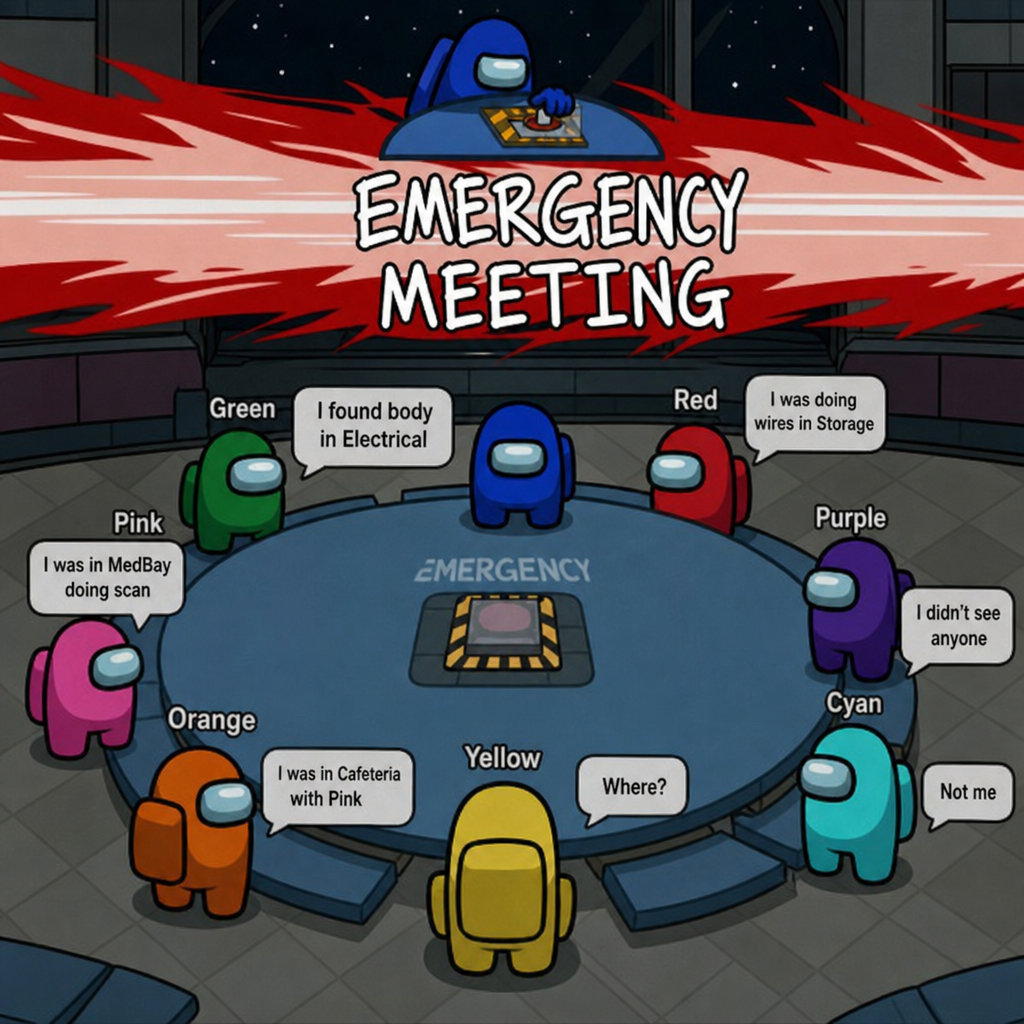
The Among Us multiplayer social deduction game gives players a straightforward conflict. Crewmates complete tasks and try to identify impostors, while impostors eliminate crewmates, sabotage systems, and pretend to help. Reports and emergency meetings bring everyone together to discuss suspicions and vote. Cross-platform play also lets friends join from supported computers, consoles, and mobile devices. (store.steampowered.com)
Choose it for: A mixed-experience group that wants a clear starting point rather than an extensive role glossary.
For your first session, prioritize learning the map and explaining the meeting rules. Ask players to distinguish observations from guesses: “I saw someone leave that room” is more useful than “they sounded nervous.” Keep the initial settings uncomplicated, then experiment once everyone understands how a normal round unfolds. The goal should be an interesting argument, not a rules dispute.
2. Goose Goose Duck: More roles and competing motives
Goose Goose Duck pairs task-completing geese with sabotaging ducks, then adds neutral roles pursuing their own objectives. Its proximity voice chat supports conversations between nearby players, while different roles introduce additional reasons for suspicious behavior. Those overlapping objectives make it a useful alternative when your group wants more uncertainty than a simple two-sided contest. (store.steampowered.com)
Choose it for: Friends who enjoy experimenting with roles and talking their way through unexpected situations.
Start by agreeing on a manageable role selection rather than enabling everything available. Ask each player to read their objective before the round begins, and explain unfamiliar mechanics afterward without revealing active secrets. Add complexity gradually. That gives newcomers a chance to understand why something happened instead of treating every surprising outcome as random chaos.
3. Project Winter: Betrayal under survival pressure
Project Winter combines social deception with wilderness survival. Survivors gather resources, repair objectives, and work toward escape, while hidden traitors sabotage or mislead them. The environment creates another source of pressure, so the group must accomplish practical work rather than spend the whole match trading accusations. (store.steampowered.com)
Choose it for: Players who want cooperation to involve more than completing isolated minigames.
The appeal is the uncomfortable trade-off between efficiency and trust. Splitting up might help your team gather what it needs, but consider how you’ll account for everyone’s movements afterward. For an introductory session, explain the escape process before discussing elaborate traitor tactics. Give new players a concrete job and encourage them to report where they’re going. Save advanced strategies for when the group understands the survival basics.
4. Town of Salem 2: Role-driven deduction
Town of Salem 2 reached its full Steam release on August 25, 2023, following an Early Access launch on May 26. It emphasizes hidden roles with distinct objectives and abilities, using in-game chat for persuasion, claims, and discussion. That makes it an appealing option for players who want to examine what someone claims they can do—not just where they say they were standing. (store.steampowered.com)
Choose it for: Patient players who enjoy learning interacting rules and building a case from competing claims.
Approach your first matches as practice in organizing information. Keep brief notes on claimed roles, reported actions, and contradictions, then separate confirmed facts from assumptions. Avoid pretending to understand a role you haven’t learned yet. Ask for an explanation when appropriate, and review confusing outcomes afterward. Your first goal should be understanding the evidence, not producing a spectacular bluff.
5. First Class Trouble: Mischief aboard a luxury spaceship
First Class Trouble places human Residents and human-looking robotic Personoids aboard an intergalactic cruise ship. Residents work toward shutting down a dangerous artificial intelligence, while Personoids deceive and undermine them. Its luxurious setting and mischievous interactions give the conflict a different flavor from a stark spaceship murder mystery. (store.steampowered.com)
Choose it for: A group that likes role-playing suspicion and can enjoy a plan going sideways.
Try this when your friends want an experience built around interacting with one another, not simply delivering polished accusations. Before starting, agree on how seriously you want to compete. A group chasing careful deduction may have different expectations from one looking for slapstick betrayal. Setting that expectation early helps keep an unexpected elimination funny rather than frustrating, especially while everyone is still learning.
6. Unfortunate Spacemen: Suspicion with teeth
Unfortunate Spacemen adds combat and shapeshifting to its deception. In Shapeshifter Mode, spacemen pursue rescue objectives while a monster can disguise itself as other players, set traps, or attack directly. Proximity chat makes distance matter to communication, and the game also includes separate cooperative modes. (store.steampowered.com)
Choose it for: Friends who want horror and action alongside the social puzzle.
Make sure everyone wants that combination before selecting it. Someone who enjoys debating clues may not want the additional pressure of fighting or fleeing. Start with a learning session and identify the mode you intend to play; cooperative survival and hidden-monster deception serve different moods. Encourage clear callouts about locations and events, then compare accounts afterward rather than relying entirely on who sounds convincing.
Which online multiplayer social deduction game fits your group?
The best online multiplayer social deduction game for your group is the one whose learning demands and play style match everyone’s expectations. My suggested starting point is Among Us for a straightforward introduction, Town of Salem 2 for role-based reasoning, or Project Winter for survival-focused teamwork. Choose Goose Goose Duck for added role variety, First Class Trouble for mischievous interaction, and Unfortunate Spacemen for an action-horror blend. (store.steampowered.com)
When comparing social deduction games on Steam, use this checklist before asking everyone to install one:
- Confirm compatibility: Check each person’s device, operating system, and the exact cross-platform combinations supported.
- Count committed players: Plan around who will actually attend, not the largest number in your group chat.
- Agree on communication: Decide whether everyone is comfortable speaking, typing, or using proximity chat.
- Set a complexity budget: Ask whether the group wants a short explanation or is willing to learn interacting roles.
- Check the route into a match: Decide whether you’ll host privately, join public games, or need additional players.
- Discuss content preferences: Don’t assume everyone wants horror, combat, or the same level of competitive pressure.
Make the first session worth repeating
Before playing, agree on one simple principle: deception belongs inside the game. Avoid personal insults, outside information, or arguments about someone’s real-world honesty. You’re testing an invented story, not a friendship.
For a smoother introduction, try this sequence:
- Explain the win conditions first. Everyone should know what their side is trying to accomplish.
- Run a learning round. Allow mistakes without turning every unfamiliar action into an accusation.
- Keep evidence specific. Ask what happened, where it happened, and who could have witnessed it.
- Review confusing moments afterward. Discuss mechanics once revealing them won’t spoil an active match.
- Adjust one setting at a time. Make it easier to identify which changes your group actually enjoys.
The strongest choice isn’t necessarily the most complicated one. Pick the kind of tension your friends want, make room for beginners, and let the memorable betrayals develop naturally. These online social games should leave everyone eager for another round—even the person who was confidently, spectacularly wrong.
Try Mafia Deck Online
Releases November 5 on Steam — US$3 with a 40% launch discount. Wishlist it now.
Related: Games Like Among Us · Best Mafia Games · Social Deduction Games Guide · Rise of Online Social Deduction